


LATEST NEWS


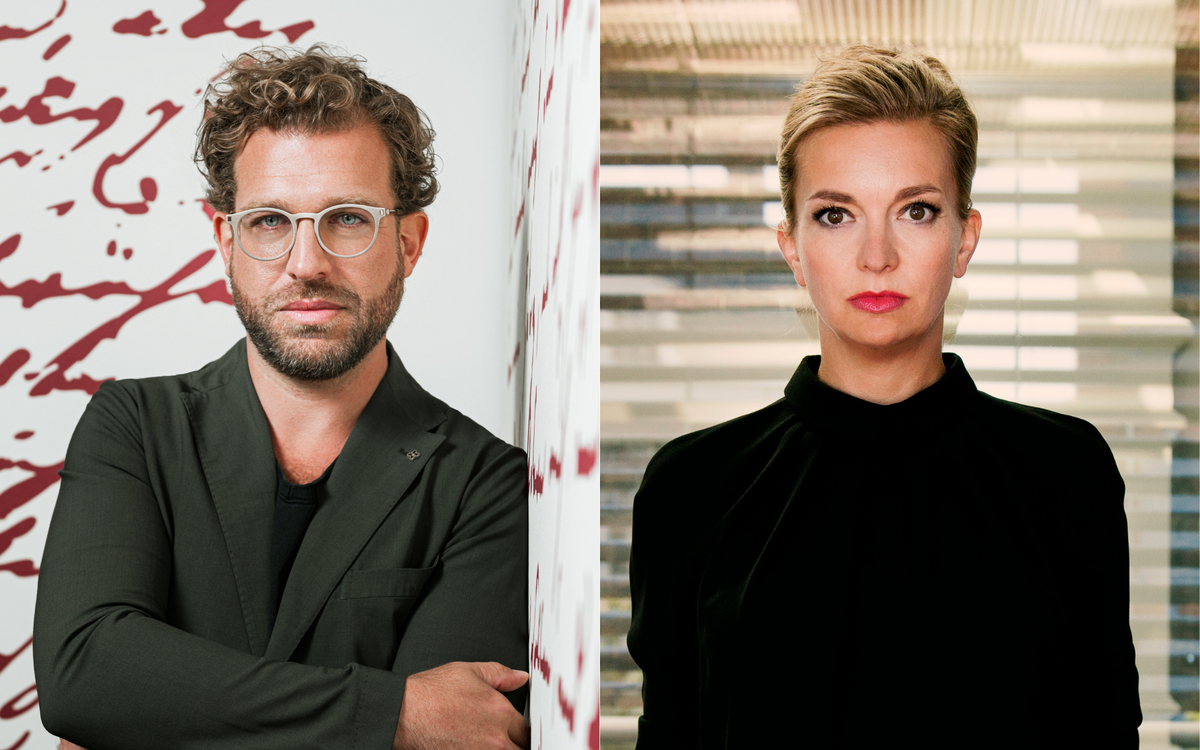


The sum of our qualities is our quality!
The name Machreich stands not only for an invitation to active music-making and the economic success resulting from it. The agency’s founder and her colleagues dedicate themselves first and foremost to the unique artistic development of each of their singers. In an atmosphere of mutual trust and personal connection, individual projects can be conceived and inspiring constellations initiated. Intuition and discretion are the highest precepts for the work of a highly qualified team, which engages in its work with heart and mind.
(photo credit: Stephan Doleschal)
Machreich Artists Management
“Art is not, after all, a pretty add-on – it is the umbilical cord which connects us to the divine; it guarantees our identity as humans.”
(Nikolaus Harnoncourt)
CALENDAR
„Also spiegle du in Liedern, was die Erde Schönstes hat“
(J. W. v. Goethe „Auf dem See“)
“Singing beautifully on its own isn’t enough,” says Thomas Quasthoff – and he should know, as he is still regarded today as one of the world’s most renowned lieder singers. What exactly is it that makes him so fascinating? What has he done differently from others in his classical career? And can one learn that? In principle, yes, because a key focus of Thomas Quasthoff’s musical work – he has been teaching classical singing at the Hanns Eisler Academy of Music in Berlin since 2004 – is his highly sought-after ‘masterclasses’. These are aimed at singers who are at an advanced stage of their studies or have already successfully completed them.
With precision and intensity, Thomas Quasthoff works with the young singers on stage on the technical and interpretative challenges of classical singing. The focus is on breathing, support, articulation and interpretation. Even if the audience may not understand the language, they must sense what it is all about. For Quasthoff, the recital is the most authentic form of musical performance, as there is no way to hide behind anything – no set, no costume, no staging. There is no orchestra to accompany you, just the piano and the voice.
“What we singers project onto the stage in deep red must at least reach the back row in pale pink.” For a whole week, Thomas Quasthoff will be working intensively with young singers live in front of an audience. You are warmly invited to witness just how hard it is to make everything sound so effortless in the end. And perhaps here in Weimar you will encounter some talented young artists who will one day go on to enjoy international careers. As well as the art song genre, Thomas Quasthoff will, of course, also focus on the interpretation of the operatic repertoire and will engage fully with the young musicians. At the piano, he will be accompanied by Eva Sperl, Thomas Quasthoff’s long-standing musical partner, who works with young pianists at the ‘Franz Liszt’ University of Music in Weimar.
To round off the week, the young artists will present a grand evening concert
FURTHER INFORMATION & TICKETS
Wolfgang Amadeus Mozart: La Clemenza di Tito KV 621
Katleho Mokhoabane, Tito
Hanna-Elisabeth Müller, Vitellia
Slávka Zámečníková, Servilia
Kate Lindsey, Sesto
Patricia Nolz, Annio
Peter Kellner, Publio
Jan Lauwers, direction / choreography / set design
Lot Lemm, costumes
Ken Hioco, lighting
Paul Blackman, co-choreography
Elke Janssens, dramaturgy
Cornelius Meister, conductor
„Also spiegle du in Liedern, was die Erde Schönstes hat“
(J. W. v. Goethe „Auf dem See“)
“Singing beautifully on its own isn’t enough,” says Thomas Quasthoff – and he should know, as he is still regarded today as one of the world’s most renowned lieder singers. What exactly is it that makes him so fascinating? What has he done differently from others in his classical career? And can one learn that? In principle, yes, because a key focus of Thomas Quasthoff’s musical work – he has been teaching classical singing at the Hanns Eisler Academy of Music in Berlin since 2004 – is his highly sought-after ‘masterclasses’. These are aimed at singers who are at an advanced stage of their studies or have already successfully completed them.
With precision and intensity, Thomas Quasthoff works with the young singers on stage on the technical and interpretative challenges of classical singing. The focus is on breathing, support, articulation and interpretation. Even if the audience may not understand the language, they must sense what it is all about. For Quasthoff, the recital is the most authentic form of musical performance, as there is no way to hide behind anything – no set, no costume, no staging. There is no orchestra to accompany you, just the piano and the voice.
“What we singers project onto the stage in deep red must at least reach the back row in pale pink.” For a whole week, Thomas Quasthoff will be working intensively with young singers live in front of an audience. You are warmly invited to witness just how hard it is to make everything sound so effortless in the end. And perhaps here in Weimar you will encounter some talented young artists who will one day go on to enjoy international careers. As well as the art song genre, Thomas Quasthoff will, of course, also focus on the interpretation of the operatic repertoire and will engage fully with the young musicians. At the piano, he will be accompanied by Eva Sperl, Thomas Quasthoff’s long-standing musical partner, who works with young pianists at the ‘Franz Liszt’ University of Music in Weimar.
To round off the week, the young artists will present a grand evening concert
FURTHER INFORMATION & TICKETS„Also spiegle du in Liedern, was die Erde Schönstes hat“
(J. W. v. Goethe „Auf dem See“)
“Singing beautifully on its own isn’t enough,” says Thomas Quasthoff – and he should know, as he is still regarded today as one of the world’s most renowned lieder singers. What exactly is it that makes him so fascinating? What has he done differently from others in his classical career? And can one learn that? In principle, yes, because a key focus of Thomas Quasthoff’s musical work – he has been teaching classical singing at the Hanns Eisler Academy of Music in Berlin since 2004 – is his highly sought-after ‘masterclasses’. These are aimed at singers who are at an advanced stage of their studies or have already successfully completed them.
With precision and intensity, Thomas Quasthoff works with the young singers on stage on the technical and interpretative challenges of classical singing. The focus is on breathing, support, articulation and interpretation. Even if the audience may not understand the language, they must sense what it is all about. For Quasthoff, the recital is the most authentic form of musical performance, as there is no way to hide behind anything – no set, no costume, no staging. There is no orchestra to accompany you, just the piano and the voice.
“What we singers project onto the stage in deep red must at least reach the back row in pale pink.” For a whole week, Thomas Quasthoff will be working intensively with young singers live in front of an audience. You are warmly invited to witness just how hard it is to make everything sound so effortless in the end. And perhaps here in Weimar you will encounter some talented young artists who will one day go on to enjoy international careers. As well as the art song genre, Thomas Quasthoff will, of course, also focus on the interpretation of the operatic repertoire and will engage fully with the young musicians. At the piano, he will be accompanied by Eva Sperl, Thomas Quasthoff’s long-standing musical partner, who works with young pianists at the ‘Franz Liszt’ University of Music in Weimar.
To round off the week, the young artists will present a grand evening concert
FURTHER INFORMATION & TICKETSFranz Schreker: Intermezzo for String Instruments op. 8
Wolfgang Amadeus Mozart: “Ei parte … senti … – Per pietà, ben mio, perdona” Recitative and Aria of Fiordiligi from “Così fan tutte” K. 588
Wolfgang Amadeus Mozart: “Estinto è Idomeneo?... – Tutte nel cor vi sento” Recitative and Aria of Elettra from “Idomeneo” K. 366
Wolfgang Amadeus Mozart: “Crudele! ... – Non mi dir, bell'idol mio” Recitative and Aria of Donna Anna from “Don Giovanni” K. 527
Wolfgang Amadeus Mozart: “O smania! O furie! ... – D'Oreste, d'Aiace ho in seno i tormenti” Recitative and Aria of Elettra from “Idomeneo” K. 366
Felix Mendelssohn Bartholdy: Symphony No. 4 in A major op. 90 “Italian”
Christiane Karg, soprano
Andreas Ottensamer, conductor
NDR Radiophilharmonie
Giuseppe Verdi: Aida
Anna Netrebko, Aida
Yusif Eyvazov, Radames
Artur Ruciński, Amonasro
Ekaterina Semenchuk, Amneris
Alexander Köpecki, Ramfis
Riccardo Fassi, King
Moisés Marín, A Messanger
Carmen Buendía, Priestess
Antonello Manacorda, Conductor
Shirin Neshat, Stage Director
Christian Schmidt, Stage
Tatyana van Walsum, Costumes
Felice Ross, Light
Dustin Klein, Choreographer
Peter Venus, Video